
This is part of a series of brief introductions to diverse styles of yoga and the teachers that specialize in them, meant to inform and inspire your practice. This edition was co-written with teacher Bruce Chung.
“In an age of speed, I began to think, nothing could be more invigorating than going slow. In an age of distraction, nothing can feel more luxurious than paying attention. And in an age of constant movement, nothing is more urgent than sitting still.”
― Pico Iyer
Restorative yoga is an invitation to slow down, to restore the body to its natural state of equilibrium. Unlike dynamic forms of yoga that build heat and strength, restorative yoga builds stillness, and invites the body into a deep state of rest where healing and balance can take root.
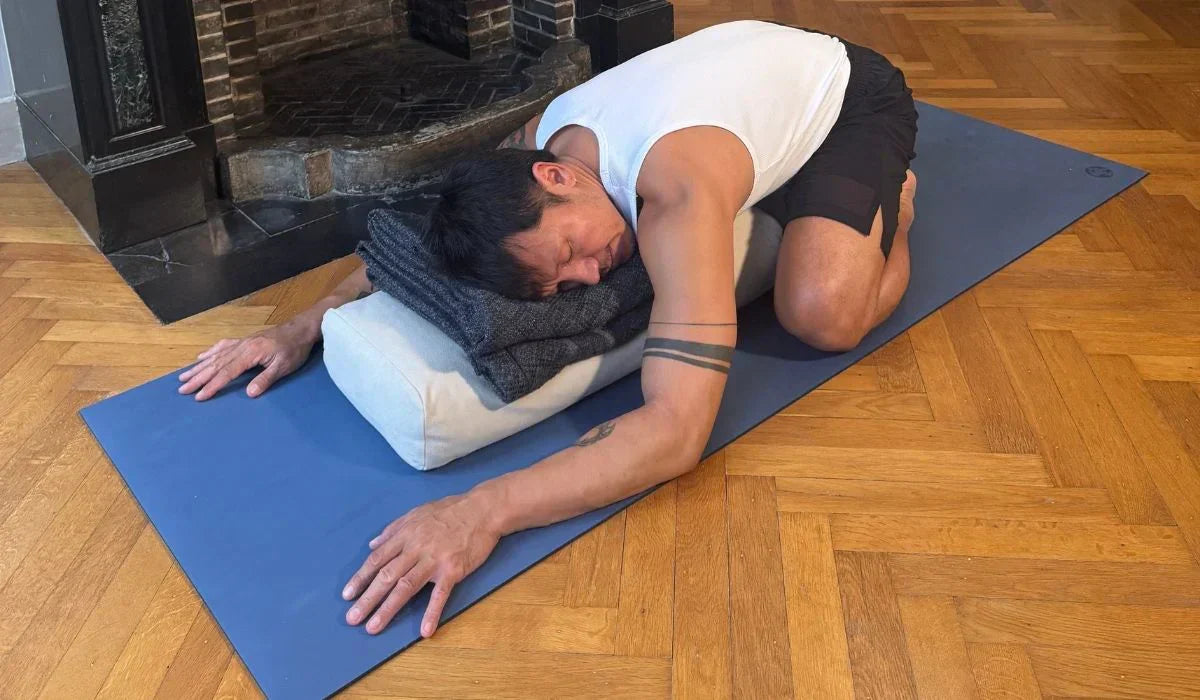
Its origins trace back to B.K.S. Iyengar, who began developing supportive, therapeutic postures in the 1930s for students recovering from illness or injury. Using props like bolsters, blankets, and straps, Iyengar found that when the body feels completely supported, it can let go of unnecessary effort. This became the foundation for restorative yoga as we know it today: a practice that replaces “no pain, no gain” with “no pain equals gain.”
One of Iyengar’s senior students, Judith Hanson Lasater, helped bring restorative yoga to the modern era. A physical therapist as well as a yoga teacher, Judith merged Iyengar’s prop-based precision with a deep understanding of anatomy and therapeutics. Through her trainings and influential books, she made the restorative yoga practice accessible worldwide, reminding practitioners that rest is not a luxury but a vital component of wellness.
In restorative yoga, poses are held for five to twenty minutes, allowing the body to shift from the “fight or flight” stress response into “rest, digest, and repair.” This shift activates the parasympathetic nervous system and supports the body’s innate drive towards homeostasis, its natural balance point. When this system engages, the heart rate slows, breathing deepens, and the mind begins to quiet. Over time, the practice becomes more than physical rest; it becomes a homecoming, a gentle return to one’s self.
“Restorative yoga is different from yin yoga. There should be no stress in the body whatsoever,” says Bruce Chung, E-RYT 500 and teacher trainer. “Every prop serves a purpose: to remove effort so the nervous system can drop into a state of ease and safety.”
Science backs this up. Studies show that restorative practices can lower cortisol levels, regulate vagal tone, and even enhance immune function through improved neuroimmunological balance. Students often report better sleep, reduced anxiety, and a clearer sense of presence.
Restorative yoga meets you where you are: whether recovering from burnout, balancing intense training, or simply craving calm. You don’t need experience, strength, or flexibility, only a willingness to slow down long enough to listen.
Because in a world that rewards doing, restorative yoga teaches the quiet power of being.
Practice on
Find more restorative yoga practices here on the MandukaMag.
Connect
Website: mymatesyogaapp
Instagram: @_brucechung